






CONTATTACI
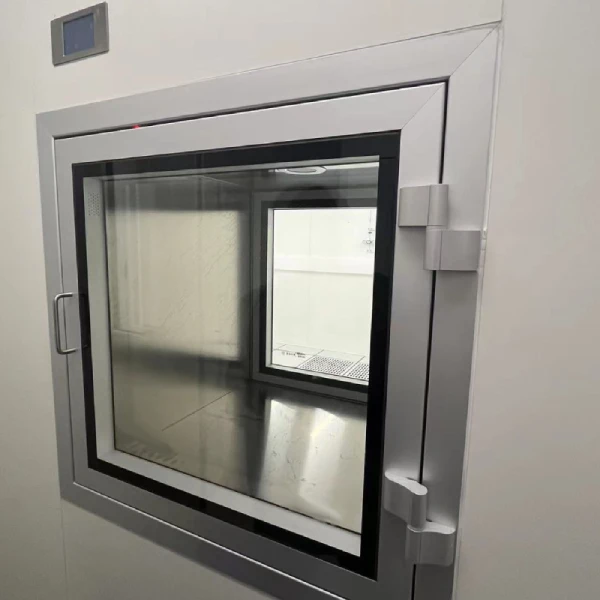
Scatola di passaggio in alluminio
Panoramica:
Il Cleanroom Aluminum Pass Box è un dispositivo di trasferimento di materiale installato tra aree pulite e non pulite, o tra zone di diversi livelli di pulizia. La sua funzione primaria è quella di ridurre al minimo le aperture delle porte della stanza pulita durante il trasferimento di materiale, prevenire la contaminazione incrociata e mantenere la classificazione della pulizia di diverse aree. Costruito con un telaio in lega di alluminio, il pass box offre design leggero, resistenza alla corrosione, aspetto estetico e durata. È ampiamente utilizzato in prodotti farmaceutici, laboratori biologici, produzione di elettronica, trasformazione alimentare e altre industrie che richiedono ambienti puliti rigorosamente controllati.
Parole chiave:
DETTAGLI:
1. Product Structure
The Aluminum Pass Box consists of the following main components:
| Component | Material/Specification | Function |
|---|---|---|
| Frame/Body | Aluminum alloy profile | Main load-bearing structure, lightweight and sturdy |
| Doors (both sides) | Aluminum + tempered glass window | Double-layer 5mm tempered glass for internal observation- |
| Interlocking Device | Mechanical/Electronic interlock | Prevents both doors from being opened simultaneously- |
| Sealing System | High-efficiency sealing gasket | Ensures airtightness when doors are closed |
| Work Surface | Stainless steel / Non-powered rollers | Smooth, wear-resistant surface for easy material transfer- |
| Control Panel | Intelligent controller (optional) | Controls interlock, UV lamp, buzzer, etc. |
Optional Configurations:
-
UV Sterilization Lamp-
-
HEPA/ULPA High-Efficiency Filters
-
Buzzer/Intercom System
-
Differential Pressure Gauge
-
Electromagnetic Lock Electronic Interlock
-
PAO Test Port
2. Product Features
1. Material Advantage
-
Lightweight yet strong aluminum alloy for easy installation and relocation
-
Anodized surface for enhanced wear and corrosion resistance
-
Aesthetic appearance suitable for cleanroom environments-
2. Interlock Protection
-
Mechanical or electronic interlock ensures both doors cannot be opened simultaneously
-
Effectively prevents cross airflow contamination and maintains cleanroom pressure differential-
-
3. High Sealing Performance
-
Precision manufacturing ensures tight sealing between body and doors
-
Sealing gaskets minimize air leakage-
4. Operational Convenience
-
User-friendly design for simple operation
-
Supports left/right door opening adjustment-
-
Optional non-powered rollers for easy transfer of large items-
5. Customizability
-
Dimensions can be customized to customer requirements
-
Functional modules can be combined as needed
4. Technical Specifications (Standard Model)
| Parameter | Specification |
|---|---|
| External Dimensions (W×D×H) | 760×660×660 mm (customizable)- |
| Internal Dimensions (W×D×H) | 600×600×600 mm (customizable) |
| Frame Material | Aluminum alloy profile |
| Interior Material | Stainless steel / Aluminum alloy |
| Window Material | 5mm tempered glass (double-layer)- |
| Interlock Type | Mechanical / Electronic interlock |
| Power Supply | AC220V, 50Hz (for electronic interlock) |
| Optional Functions | UV lamp, HEPA filter, buzzer, intercom |
5. Product Classification
| Type | Features | Application |
|---|---|---|
| Standard Pass Box | Basic interlock function, no purification | General transfer between clean and non-clean areas |
| Air Shower Pass Box | Built-in fan and HEPA filter with self-cleaning function | Material transfer between high-grade clean areas |
| Self-Cleaning Pass Box | HEPA filtration system for internal air circulation purification | ISO Class 5 and above cleanrooms |
| UV Pass Box | Built-in UV sterilization lamp for surface disinfection | Biopharmaceutical, laboratory aseptic transfer |
6. Working Principle
The working principle of the Aluminum Pass Box can be summarized as High Sealing + Interlocking + Physical Isolation:
Operation Process:
-
Operator on the low-cleanliness side opens the outer door
-
Places materials inside the chamber
-
Closes the outer door (interlock activates)
-
Operator on the high-cleanliness side opens the inner door
-
Removes materials and closes the inner door, completing transfer
Interlock Principle:
-
When one door is opened, the opposite door is automatically locked
-
Ensures air from both zones does not directly communicate
-
Prevents pressure differential disruption and contaminant entry
Purification Principle (Optional):
-
HEPA filter circulates and filters internal air
-
UV lamp irradiates material surfaces for disinfection
-
Ensures cleanliness of both materials and environment during transfer
7. Application Areas
Aluminum Pass Boxes are widely used in the following industries:
1. Pharmaceutical and Drug Manufacturing-
-
Transfer of raw materials, excipients, semi-finished products between different cleanroom grades
-
Complies with GMP standards
-
Supports high-frequency material turnover
2. Biological Laboratories
-
Transfer of biological reagents, cell cultures, microbial specimens
-
UV sterilization function ensures experimental safety
-
Suitable for BSL-2 and above laboratories
3. Electronics and Semiconductor Manufacturing
-
Clean transfer of chips, circuit boards, precision components
-
Reduces dust and static interference on components
-
Improves product yield and production stability
4. Food Processing Industry
-
Transfer of packaging materials, seasonings, semi-finished products
-
Prevents pests, dust, and microorganisms from entering production areas
-
Complies with HACCP food safety standards
5. Medical Facilities
-
Sterile transfer of medical devices and surgical instruments
-
Complies with ISO cleanroom standards
-
Suitable for operating rooms, sterile supply departments
8. Selection Guide
When selecting an Aluminum Pass Box, consider the following factors:
| Factor | Recommendation |
|---|---|
| Material Selection | Stainless steel for high cleanliness requirements; Aluminum for lightweight needs |
| Dimensions | Determine internal space based on maximum material size |
| Interlock Type | Electronic interlock for higher safety; Mechanical interlock for cost-effectiveness |
| Purification Function | UV lamp or HEPA filter required for sterile environments |
| Installation Environment | Verify wall opening dimensions and installation method |
| Certification Requirements | Pharmaceutical industry must comply with GMP standards |
9. Installation & Maintenance
Installation:
-
Cut corresponding opening in the wall
-
Use aluminum profile/galvanized sheet/stainless steel for edge trimming
-
Ensure level installation with proper sealing
Daily Maintenance:
-
Clean internal and external surfaces daily
-
Regularly inspect sealing gasket integrity
-
Test interlock functionality periodically
-
For HEPA filter units, perform regular integrity testing
10. Conclusion
The Cleanroom Aluminum Pass Box is an essential material transfer device in controlled environments. Its combination of lightweight aluminum construction, reliable interlock protection, and customizable features makes it an ideal choice for pharmaceutical, laboratory, electronics, and food industry applications. Proper selection, installation, and maintenance ensure long-term reliable operation and contamination control.
Domande frequenti
- 1 Come migliorano i blocchi elettronici il funzionamento?
- 2 Quale metodo di installazione è migliore per applicazioni sterili?
- 3 Quale manutenzione della guarnizione di tenuta è necessaria?
- 4 Qual è la corretta procedura di disinfezione dei materiali?
- 5 Il campionamento superficiale è necessario per le camere di passaggio?
- 6 Come devono essere classificate le camere di passaggio per la pulizia?
- 7 Come funziona il sistema di interblocco delle porte?
- 8 Qual è lo scopo principale di una camera passante?
1
Come migliorano i blocchi elettronici il funzionamento?
I blocchi elettronici forniscono avvisi audio/visivi quando le porte sono lasciate aperte, evitano danni accidentali da apertura forzata, abilitano l'integrazione BMS e supportano il controllo di accesso con la registrazione dei dati dell'utente.
2
Quale metodo di installazione è migliore per applicazioni sterili?
Utilizzare costruzione in acciaio inossidabile completamente saldata con saldature a cuciture continue e angoli a raggio liscio. Ciò elimina crepe e crepe difficili da pulire dove i contaminanti possono accumularsi.
3
Quale manutenzione della guarnizione di tenuta è necessaria?
Ispezionare le guarnizioni in EPDM o silicone per la compressione del 250% quando la porta è chiusa. Sostituire se indurito, crepata o perdita di elasticità. Pulire con alcol al 70%; Evitare il cloro o forti detergenti acidi che causano corrosione.
4
Qual è la corretta procedura di disinfezione dei materiali?
Seguire "pulire prima, poi disinfettare" - rimuovere l'imballaggio esterno, asciugare con alcol isopropilico al 70% o acido peracetico allo 0,5%, posizionare con spazio tra gli articoli e esporre agli UV per un minimo di 15 minuti (30 minuti raccomandati).
5
Il campionamento superficiale è necessario per le camere di passaggio?
Sì. USP 797 richiede il campionamento superficiale di tutte le aree classificate, incluse le camere di passaggio. I CSP di categoria 1/2 richiedono un campionamento mensile; La categoria 3 richiede campionamenti settimanali e campionamenti a fine lotto.
6
Come devono essere classificate le camere di passaggio per la pulizia?
Assegnare la classificazione ISO dello spazio connesso più pulito. Ad esempio, se un passaggio collega ISO 8 a ISO 7, classificarlo come ISO 7. Le migliori pratiche del settore seguono lo standard più elevato delle due aree collegate.
7
Come funziona il sistema di interblocco delle porte?
L'interlock (meccanico o elettronico) consente di aprire una sola porta alla volta. Quando si apre una porta, la porta opposta si blocca automaticamente, creando una serratura d'aria che impedisce la contaminazione incrociata e mantiene i differenziali di pressione dell'ambiente.
8
Qual è lo scopo principale di una camera passante?
Una camera passante è un recinto installato in una parete di una stanza pulita per facilitare il trasferimento di materiale tra aree riducendo al minimo il rischio di contaminazione. Riduce il traffico pedonale, mantiene la pressione differenziale e impedisce lo scambio di aria non filtrata attraverso porte interbloccate.